
1939 Opel Kapitän
Article in Car Design Archives by Franklin Moquette
In 1936 Harley Earl, head of the design department of General Motors, ordered his ‘crown prince’ Franklin Hershey to assemble and lead a design team and travel to Nazi Germany to design the new Opel six cylinder family car. GM had owned 100% of the shares in the Opel works in Rüsselsheim since 1931 and had set up a ‘copy’ of their US design studio there. So on their arrival in Germany, Franklin Hershey, Strother MacMinn, John Coleman and George Jergenson found a trusted design environment at Opel, one they were already accustomed to. Head of the Opel construction department, Dr. Karl Stief, added Hans Mersheimer to this team as an intermediary. They immediately set out to design the Opel Kapitän (Captain) for 1939. This car was to have an integral (self-supporting) body that Opel had already pioneered while designing the Opel Olympia of 1936. This time they were using the same concept for a much bigger car.
Far from the prying eyes of Detroit, this international team did things the mother company in Detroit wasn’t yet ready for… At a certain point they wanted to connect the line of the front fender with the rear fender, in effect creating a ‘pontoon body’. But after evaluating the clay models of this design, they concluded that this looked very bulky and were afraid that customers weren’t ready for this yet. Instead, the design team led by Franklin Hershey drew the line of the front fender into the front door. In the prewar years this was still a novelty. After the war this design element was seen in the Chevrolet Master Series of 1946, Morris Minor and Peugeot 203 (both 1948).
The Opel Kapitän was ready for production at the end of 1938 and created a sensation at the Geneva Salon International de l’Automobile in March 1939. For political reasons the Opel Kapitän was also sold under the names ‘Super Six’ and ‘Captain’ in certain countries.
Because of the outbreak of World War Two in September 1939 only 25.374 units of all models (4-door, 2-door and 2-door convertible) were built. Most of these cars ended up in the hands of the German Wehrmacht, which used these cars extensively on the Eastern Front. Many were left behind there, effectively leaving the Soviet-Union as the most significant ‘export market’ for the Kapitän…
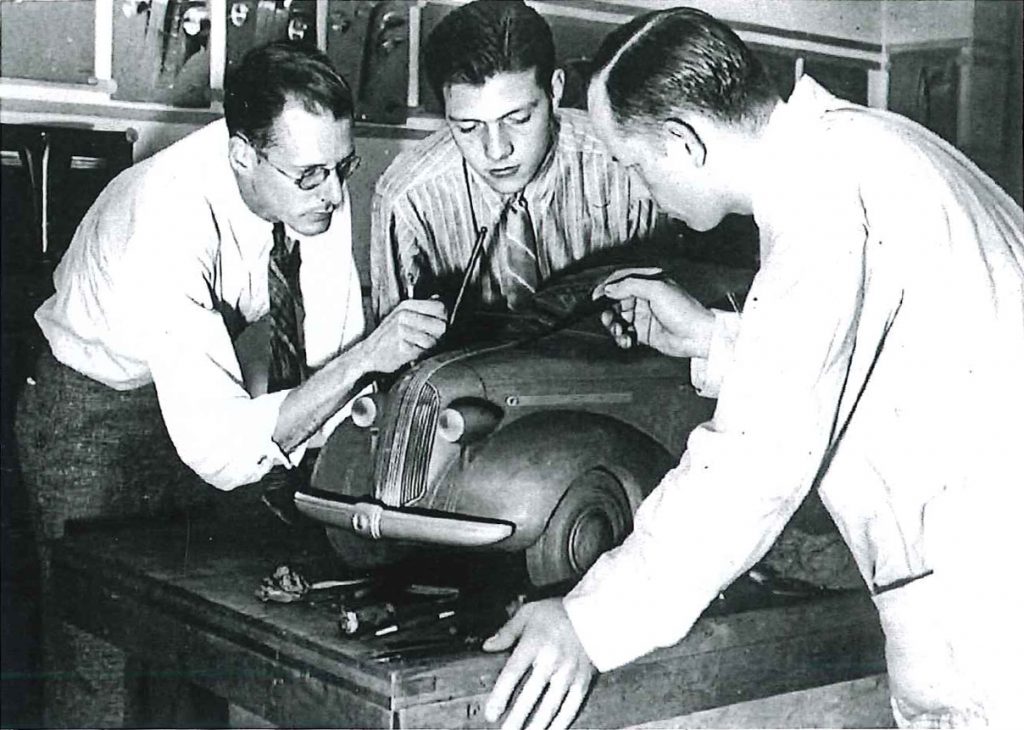
Franklin Hershey (left) busy working on the clay model of the Pontiac 1936 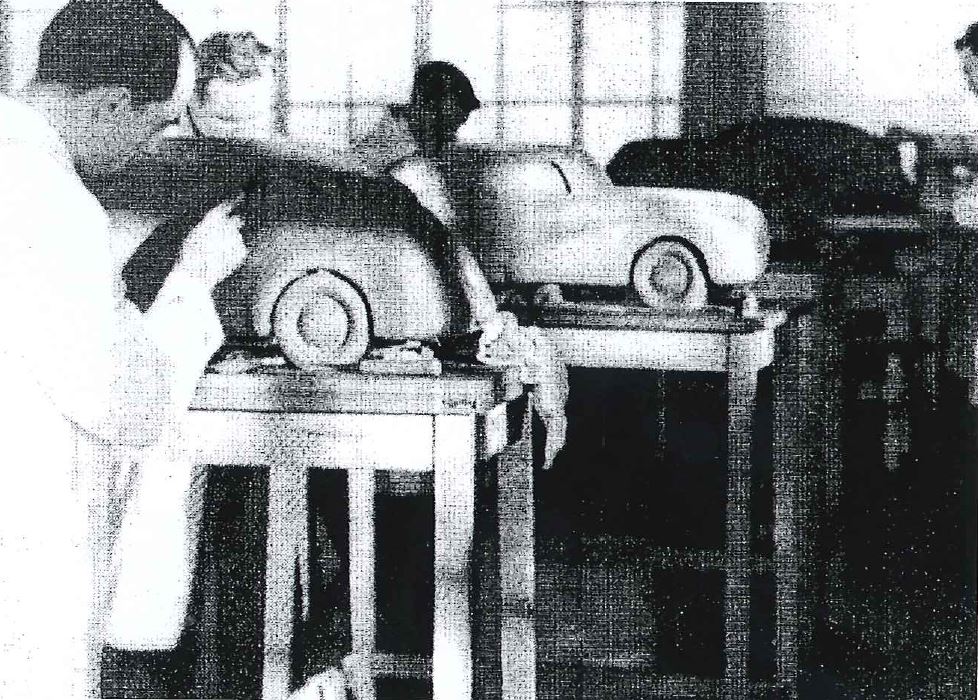
Clay models of the Kapitän in the design department of Opel 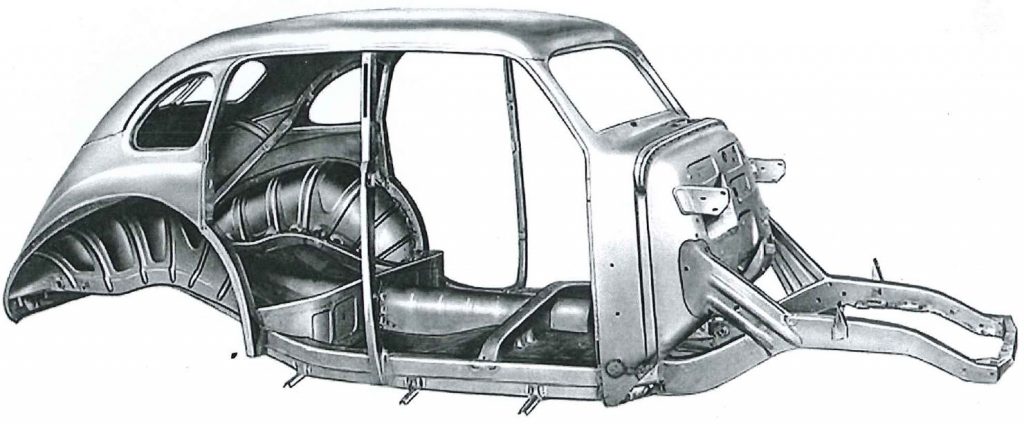
The 4 door sedan got his strength and stiffness from the rounded contstruction of the roof (Photo: Opel Archive) 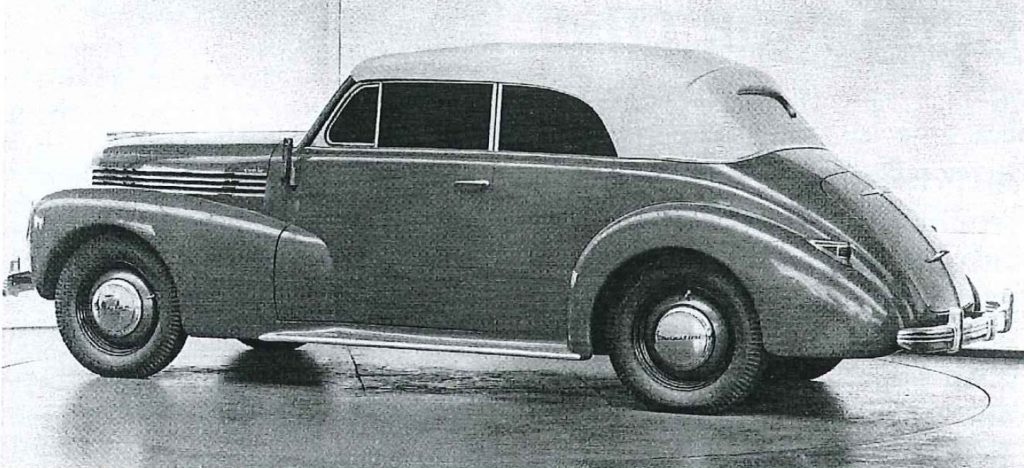
Wooden mock-up of the convertible 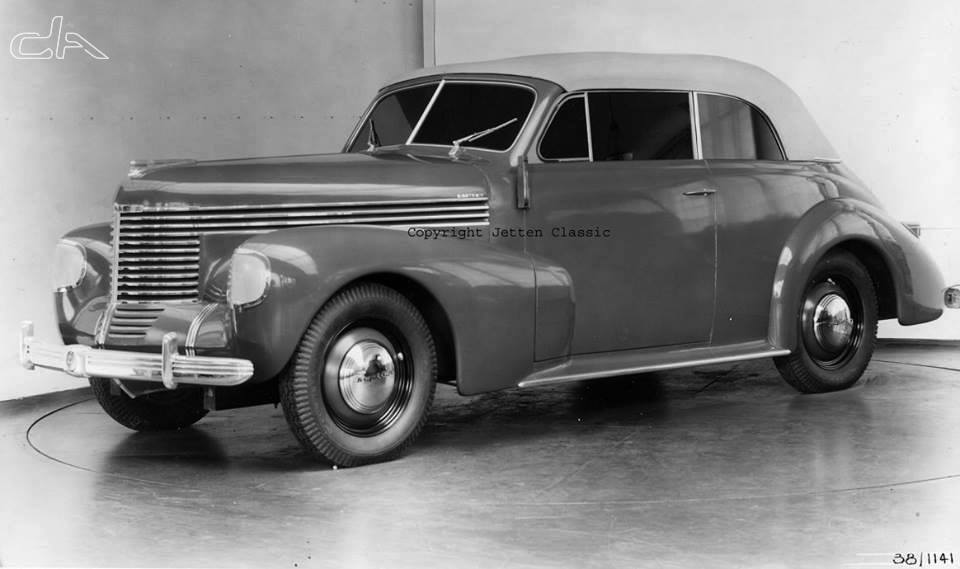
Wooden mock-up of the convertible